

Understanding Your Building’s Heating System: Furnace, Boiler, and Radiator Basics
When the weather turns cold, you want to know your heat will come on. It also helps to know what’s behind it. Most rental buildings use one of a few common heating setups, and knowing which one serves your unit makes it easier to spot a problem early and get it fixed quickly.
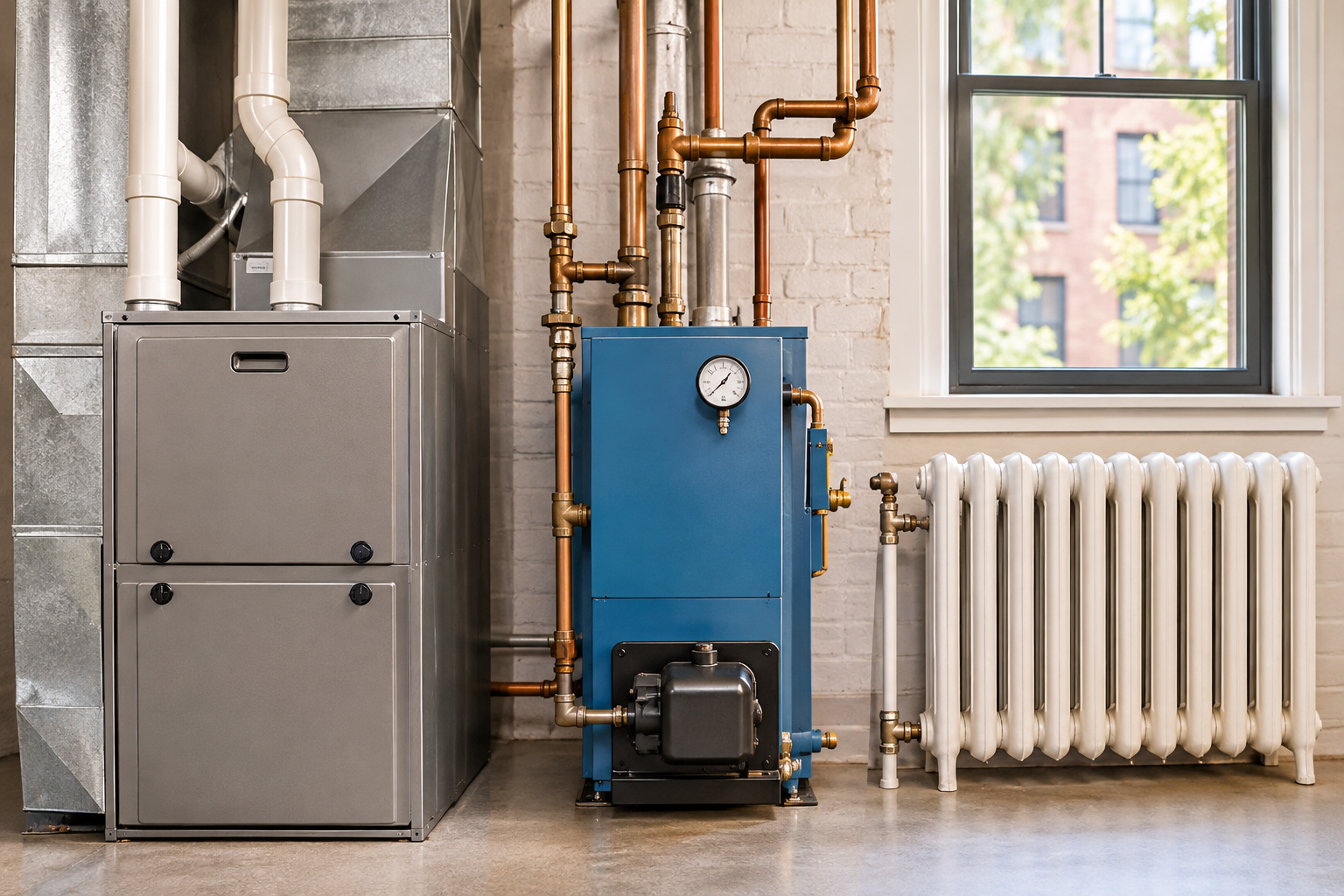
Furnaces: Warm Air Through Vents
A furnace heats air and pushes it through ducts to the vents in your unit. If you feel warm air coming out of floor or wall registers, you likely have a furnace.
- Filters matter. A dirty filter makes the system work harder and can reduce how much heat reaches your unit. Filter changes are usually handled by your property management team, so if you’re not sure when yours was last done, send in a maintenance request.
- Keep vents clear. Furniture, rugs, and curtains over a vent can block airflow and leave rooms colder than they should be.
- Some noise is normal. A click when the furnace starts and a hum while it runs are typical. Banging, grinding, or a burning smell are not.
Boilers: Heating Water, Not Air
A boiler heats water and sends it through pipes to radiators or baseboard heaters. Boilers are common in older buildings and often serve the whole building or a section of it. You typically can’t control the boiler yourself, so please don’t adjust or open any boiler equipment. Your maintenance team handles it.
Some boilers produce hot water and others produce steam. The difference shows up in your radiators.
Radiators: Slow to Start, Steady to Heat
Radiators take longer to warm up than forced air, which surprises many tenants. Give the system some time after the heat kicks on.
- Steam radiators often have a valve on one end. They can hiss, and an occasional clank is common as the pipes heat up and expand.
- Hot water radiators run quietly. If one has cool spots at the top, it may have air trapped inside. Please don’t try to release it yourself. Submit a maintenance request and a technician can take care of it.
- Don’t cover or block them. Drying clothes on a radiator or stacking items in front of it traps heat and can make the room less comfortable. Keep a few inches of clearance around each one.
Small Habits That Help
- Set your thermostat to a steady temperature instead of turning it way up and down. Big swings rarely heat a space faster.
- Close windows and doors tightly. Weatherstripping is an inexpensive way to keep warm air in.
- If you’ll be away, keep your unit heated and above freezing so pipes stay protected.
- Test your smoke and carbon monoxide detectors, especially once the heat is running regularly. If one isn’t working, let your property management team know.
When to Submit a Maintenance Request
Reach out promptly if you notice:
- No heat, or heat that comes and goes
- One room or radiator that stays cold while the others work
- Loud banging, grinding, or other unusual sounds
- Leaks or puddles near a radiator, boiler, or furnace
- A thermostat that doesn’t respond
The fastest way to get help is to submit a request through your tenant portal with a few details about what you’re seeing. It helps to note which room is affected and how long it has been happening. If your heat is out completely, say so in the request so it can be prioritized.
If you ever smell gas, leave the unit right away and call 911 or the gas company’s emergency line from outside. Don’t flip switches or use your phone inside.
The Bottom Line
You don’t need to be an HVAC expert to stay comfortable this winter. Know which type of system heats your home, keep things clear and working, and speak up early if something seems off. A small issue reported in October is a lot easier to fix than a no-heat emergency in January.