
The Ultimate Chicago Renter's Survival Guide for Fall
Fall in Chicago means crisp air, changing leaves along the lakefront, and a shift in what your apartment needs from you. Before the temperature drops for good, here's what every Chicago renter should know to get through the season comfortably and avoid preventable headaches.
1. Check Your Heat Before You Need It
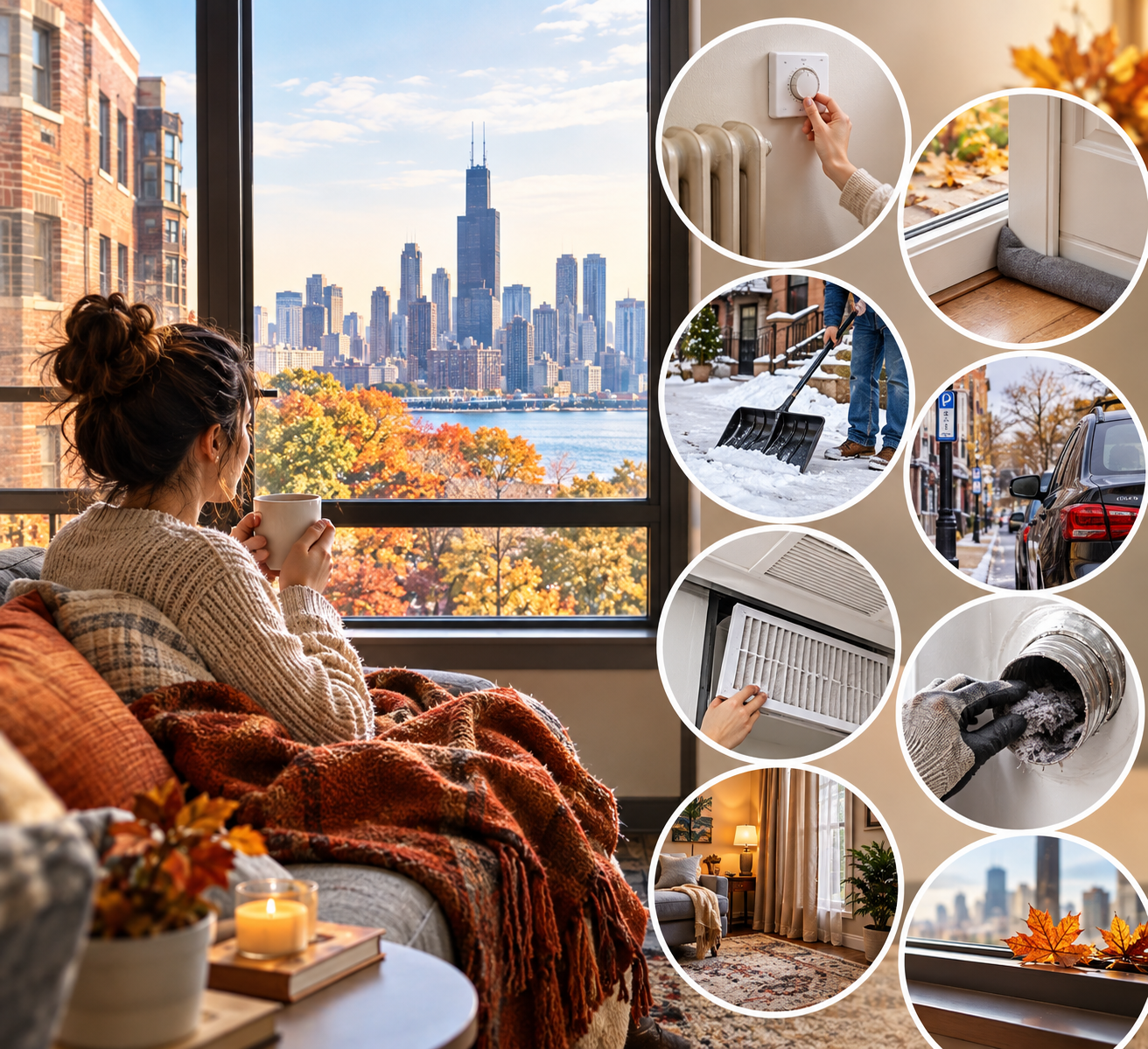
Chicago's Heat Ordinance requires landlords to provide heat starting September 15 through June 1, keeping units at a minimum temperature (66°F during the day, 63°F overnight) whenever outdoor temperatures drop below 65°F. Don't wait for the first freezing night to find out if your radiator or furnace is working. Turn it on early in the season, listen for banging pipes or uneven heating, and report any issues to your property manager right away so they can be addressed before demand for repairs spikes citywide.
2. Seal Up Drafts
Older Chicago buildings, especially vintage courtyard walk-ups and greystones, are known for character but not always for insulation. A simple draft snake at the bottom of exterior doors, weatherstripping around windows, and heavy curtains can noticeably cut down on cold air creeping in, and lower your energy bill in the process.
3. Know Your Snow and Leaf Responsibilities
Depending on your lease, snow and leaf cleanup near entryways, sidewalks, and parking spaces may fall on the property, a vendor, or in some cases the tenant. Fall is the right time to clarify this with your property manager, not after the first snowfall, so there's no confusion about who's responsible for keeping walkways safe.
4. Prep Your Parking Situation
If you rent a parking space or use street parking, remember that Chicago's overnight winter parking ban goes into effect December 1 on posted routes, and snow removal rules affect where you can park during and after a snowfall. Review your parking addendum if you have one, and make sure your vehicle information is up to date with your property manager.
5. Switch Up Your Cleaning Routine
Fall is a great time for a seasonal deep clean: swap out air filters, clean out dryer vents (a common fire hazard when lint builds up), and check smoke and carbon monoxide detector batteries. Chicago's Carbon Monoxide Alarm Detector Ordinance requires detectors near sleeping areas, so this is also a good moment to confirm yours are working.
6. Layer Up Your Space, Not Just Yourself
Renting doesn't mean your space can't feel seasonal and cozy. Area rugs, blackout or thermal curtains, and warm-toned lighting go a long way toward making a rental feel like home for fall, all without any permanent changes to the unit.
7. Watch for Maintenance Requests That Spike in Fall
Common fall maintenance issues include:
- Heating system malfunctions
- Window drafts and seal issues
- Clogged gutters contributing to leaks
- Weatherstripping wear on doors
Reporting these early, rather than waiting until winter, means faster turnaround and less disruption once temperatures really drop.
Final Thoughts
Fall in Chicago is short but beautiful, and a little preparation goes a long way toward making the transition into winter smoother. Staying proactive about heat, drafts, and seasonal maintenance means renters can enjoy the season instead of scrambling once the cold sets in.